As a designer for live events and performance, my work centers on providing a dynamic and revealing world for the action of a play or opera or event to inhabit.
Ultimately, my design philosophy centers around a singular question: What is essential?
Every production and performance must have a reason to exist. With this perspective, I gravitate towards finding a foundational, central idea - a concept that reveals to the audience what is unique and important about the “event”. I collaborate with a director and team of designers to find the strongest visual and physical embodiment of this concept that allows an event to happen simply and evocatively. I embrace the idea of designer as dramaturge, adopting the goal that one can, and should, always be learning. I value close, detailed reading that allows me to engage intensively with a text toward the purpose of fostering both an intellectual and emotional-intuitive response to a piece of source-material.
To create a visual language that is understood and intuited by an audience, a designer must pull from a wide-ranging, tested, and diverse cultural vernacular. This underscores the importance of primary research. I believe that designing for the theater is a unique convergence of many different cultural institutions and traditions – a particular form that draws specific inspiration from art, architecture, performance, and literature. Throughout my design process, my eclectic and keen interest in these various practices becomes an essential asset, a structural backbone for my work.
This philosophy asks the designer to work from the inside-out, rather than from the outside-in. When the essential is manifest in design, it allows a performance to be deliberately actionable, dramaturgically founded, and emotionally resonant. The rules of the world are understood inherently, or revealed logically. This has the additive effect of allowing the audience to lean into its own imagination - to fill in the gaps of definitive knowledge with their own perceptions. That process is one of activation and engagement. The designer captures an audience’s attention and demands their investment, intellectually and emotionally. Intuitively, the audience can then understand the world that has been created.
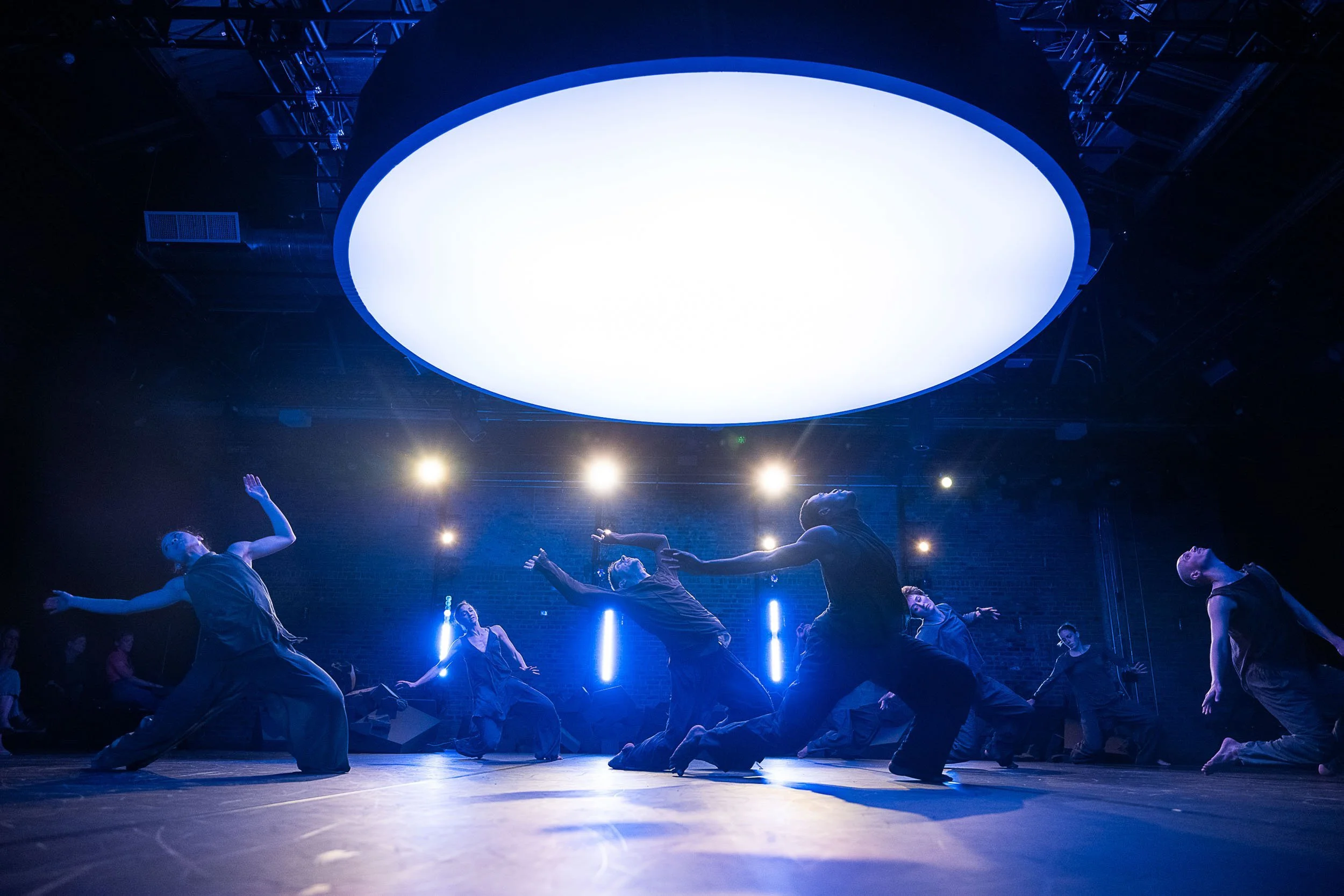
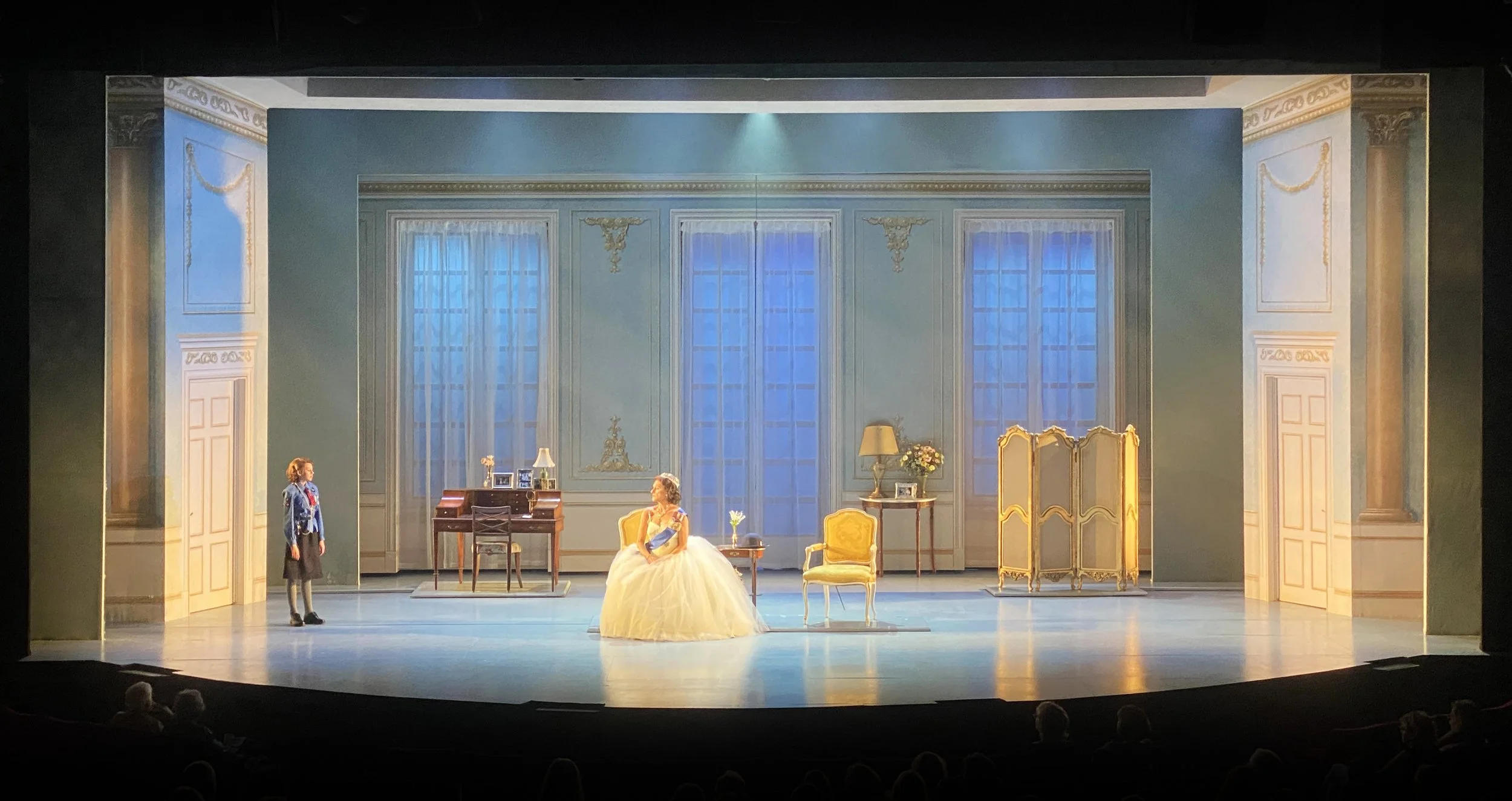
The result, or product of this philosophy turns out to be a stylistic approach best described as “epic-minimalism.” Epic-minimalism is a term coined to describe the maximalist-minimalist aesthetic that emerges from my essentialist process of design. The use of the word “epic” is a loose double entendre. On one hand, the word refers to the openness, breadth, and clarity I seek with many of my designs. On the other, the word implicitly refers to one of the stated goals articulated by the Epic Theater Movement of the early to mid 20th century - (paraphrasing) to confront the audience and acknowledge the truth of the theatrical event, rather than to seek a suspension of disbelief beyond the veil of naturalism. To honor the truth(s) of text, action, context, and material.
So what does this question - of the essential - mean for a scenic designer? How does it determine or define a process of creation - and how does this reveal an aesthetic? The answer is that a scenic designer must consider a variety of different factors - dramaturgical, subjective, and contextual factors - and make choices that distill physical and visual elements down to their essence. This is the embodiment of what is necessary, purposeful, and destined. Essentialism allows a performance to exist unencumbered by unnecessary layers of complexity, dissonant vocabularies of style, or visual distractions.
The essentialist approach asks the designer to evaluate what is necessary within the design process - in the creative steps taken, not just in product itself. If multiple iterations or versions are needed to determine the right proportion of a space, or the degree of intimacy with an audience, then the philosophy calls upon the designer to do so. The essential work aids the process of world building by demanding the artist to compare and contrast the elements of design (color/value, proportion, density, etc.). By truly looking - over and over again intuitively testing iteration after iteration - a designer will arrive at the strongest and boldest version of their vision. This process refines a designer’s subjective response, funneling the work toward a specific and personal style or aesthetic.
Dramaturgical factors are determined by what is made necessary within a script, or from a performance. What are the rules and standards of a world described in a play, opera, or performance? How do the characters behave and interact with one another? How do they relate to the audience? What are the physics of that created world? My view on dramaturgy is influentially linked to Elinor Fuchs’ “Visit to a Small Planet: Some Questions to Ask a Play” - an informative piece of writing to which I was introduced during my time teaching at the Yale School of Drama. By considering the reality that every choice in a text is deliberate and purposeful, we can allow ourselves to question and perceive the essential qualities of the environment in which a character or group of characters exist. From there - in researching the world of a play or opera, thinking about the action from the point of view of a director, and creating an indication of physical space with drawings, models, or 3D renderings - I can make choices about the essential ingredients and elements of a world, in order to best communicate the necessary information to an audience.
Subjective factors - and how they inform a design process - are often the most elusive to acknowledge and explain. Scenic designers work professionally in strange space, caught somewhere between the roles of artist, craftsperson, and manager. Our work lives in response to a source material - primary content like a text, music, or choreography. So in one way, scenic designers are supportive artists - and this requires us to maintain a deliberate and conscious relationship to the gestalt of the primary creative content. This conscious relationship may involve questioning, critiquing, and challenging the content, but the important precondition is that the primary creative content came first. It is the source material around which a world is built, for performance.
And yet designers are artists - in their own right. The subjective-intuitive response that a designer might summon from a source material can be extraordinary powerful and revealing - adding layers of meaning, specificity of intention, and clarity - thereby forging a deeper connection between performers and audience. Designers qualify and justify and evaluate their subjective response through dialogue, by listening and being present, by checking and balancing ones own’s perceptions.
Subjective factors are a crucial ingredient to essentialism, because they help the designer know intuitively which content to explore, what choices to make, and what designed elements work best in support of the source material. The artistry of the designer allows for a meaningful and personal interpretation of dramaturgical content. It is the pursuit of truth, and where design choices create beauty.
Contextual factors are important in determining how a designer might prioritize and think strategically about what dramaturgical and subjective elements are essential. There are macro-contextual questions to consider - such as: “Why are we doing this play now?”, or “Who is my audience?”, as well as micro-contextual questions to think through, such as: “What is the budget to realize this performance?” and “Where is this performance occurring?” The parameters defined by the answers to these questions create and define limitation. Metaphorically, the parameters create a Maslovian “hierarchy of needs.” These challenges are an opportunity: creativity is unleashed by acknowledging parameters and solving problems. Limitation is a necessary prompt to question, more deeply, what is essential for the “event” to exist.
In conclusion, the design philosophy that grounds my process boils down to an adaptable search for simple and clear visual communication. Because set designers are conceiving of and building worlds onstage for actors and audience to appreciate and understand - I am always searching for the most explicit, distinctive, and emotionally resonant way to reveal the truth about the world we are creating onstage - a world that supports and upholds the actions, characters, and truths imagined by a playwright, author, or choreographer. It is a philosophy best applied with a balanced ego, generosity-of-spirit, and self-awareness.